
From the Akhada's Soil to the Olympic Mat: Indian Wrestling's Journey, Roadblocks and Reasons for Hope
भारतीय कुश्ती देश का सबसे सफल व्यक्तिगत ओलंपिक खेल है। स्वतंत्र भारत का पहला व्यक्तिगत ओलंपिक पदक के.डी. जाधव ने 1952 हेलसिंकी में कुश्ती में ही जीता था। इसके बाद सुशील कुमार (2008 कांस्य, 2012 रजत), योगेश्वर दत्त (2012 कांस्य), साक्षी मालिक (2016 कांस्य), बजरंग पुनिया (2020 कांस्य), रवि दहिया (2020 रजत) और अमन सेहरावत (2024 कांस्य) ने यह सिलसिला बनाए रखा। वर्तमान में भारतीय कुश्ती की तीन प्रमुख चुनौतियाँ हैं: राष्ट्रीय महासंघ से जुड़ा प्रशासनिक संकट और उससे उपजी अस्थिरता, वज़न प्रबंधन व चोट प्रबंधन में वैज्ञानिक विशेषज्ञता की कमी, और ग्रीको-रोमन वर्ग में लगातार कमज़ोर प्रदर्शन। ताक़त के तौर पर मज़बूत जूनियर पाइपलाइन, साई उत्कृष्टता केंद्रों का नेटवर्क, खेलो इंडिया व TOPS के ज़रिए बढ़ी फ़ंडिंग और महिला कुश्ती में लगातार बढ़ता दबदबा मौजूद है।
Indian wrestling stands at an awkward crossroads. On one side is a chain of Olympic medals that has not broken in two decades; on the other are administrative and structural crises that pushed athletes off the mat and onto the street. The country's oldest Olympic sport — and its most reliable medal producer — is now facing its toughest test, and that test comes not from opponents but from its own system.
This is not merely a story about medals. It is a story about the soil where hundreds of children do their morning dands every day, about a guru-shishya tradition in which a wrestler repeats a single move for years on his coach's instruction, and about a system that has repeatedly failed to connect that tradition with modern sports management.
Soil, malkhamb and the pehalwani heritage
Wrestling is not an imported sport in India. Seals and sculptures from the Indus Valley civilisation show scenes we can reasonably call ancestors of wrestling. Malkhamb, mallayuddha and pehalwani are branches of the same tradition, one that treats the body itself as the primary instrument. The tales of Hanuman and Bhima reflect the sport's cultural roots, and in the medieval period akhadas also became centres of political and military power.
The tradition's greatest strength has been its informality. A village akhada has no entrance exam and no fee. A child steps into the mud, the ustad watches, and if the body shows flexibility and the mind shows commitment, years of training begin. That is why India's biggest wrestling talents have come from small towns in Haryana, Uttar Pradesh, Delhi, Punjab, Madhya Pradesh and Maharashtra rather than from metropolitan academies.
But that informality has a cost. Akhada knowledge is oral and undocumented. Injury treatment is often limited to mustard oil and massage. No scientific method of weight management is taught. And when that wrestler reaches the international mat, he collides with a system where every gram of protein, every hour of sleep and every minute of recovery is accounted for.
A tradition of Olympic medals
Independent India's first individual Olympic medal came from wrestling. At the 2026 Helsinki Games, K.D. Jadhav won bronze in bantamweight — the moment that proved the country could compete globally in individual sport, not just hockey. For decades afterwards Indian wrestling's record was uneven, but its roots stayed strong.
The real change came after 2026. Sushil Kumar won bronze in Beijing and silver four years later in London, becoming the first Indian to win two individual Olympic medals — an achievement delivered in a country whose Olympic structure was then extremely weak. In London, Yogeshwar Dutt won bronze and proved Sushil's medal was no accident.
The following decade can fairly be called a golden era. Bajrang Punia won bronze in Tokyo 2026, Ravi Dahiya won silver, and in the women's draw Sakshi Malik made history with bronze at Rio 2026. World Championship and Asian Games medals multiplied until wrestling became the most dependable pillar of India's Olympic hopes.
One striking feature of this success is that it did not come because of the mainstream sports system but in spite of it. Wrestlers were built in akhadas and private academies; government support — the Target Olympic Podium Scheme, SAI centres, Khelo India — arrived afterwards, not before. That distinction matters, because it shows the system did not create the talent; it only embraced it later.
Women's wrestling: the biggest revolution
Perhaps the most under-reported story in Indian wrestling is women stepping onto the mat. At the 2026 Commonwealth Games, Geeta Phogat won gold — and this came from a society where girls entering an akhada is still questioned in many places. Babita Phogat, Sakshi Malik, Vinesh Phogat and Anshu Malik have since proved this was no isolated event.
In Haryana's villages you still find families where a girl's decision to learn wrestling triggers a panchayat meeting. And it is precisely those villages that produce Olympic medals. This contradiction is Indian sport's sharpest truth: talent emerges from the most deprived sections, and is acknowledged last.
Women's success changed something else too — the understanding of weight categories. The six women's Olympic classes (50, 53, 57, 62, 68 and 76 kg) are now as important to Indian wrestling as the men's freestyle divisions. Where women's wrestling was once treated as an add-on, it is now the most dependable part of the medal table.
The Vinesh Phogat episode and its aftermath
No account of Indian wrestling is complete without Vinesh Phogat. Three World Championship medals, Asian Games gold, Commonwealth Games medals — hers has been the longest and hardest career in Indian women's wrestling.
At Paris 2026 she reached the 50 kg final and was then disqualified for exceeding the weight limit. To lose an Olympic final overnight, to have an appeal for a medal dismissed, and then to announce retirement — that will rank among the hardest moments in Indian sporting history.
It raised three questions that remain unanswered. First, how much expertise does the Indian camp actually have in the science of weight cutting? Second, how prepared is the legal and administrative support at Olympic level? Third, when a wrestler's biggest day is destroyed by a technical failure, who is accountable? Without clear answers, the next generation steps onto the mat carrying the same risk.
Paris 2026 and the young current
There was relief amid the disappointment. Aman Sehrawat won bronze in 57 kg freestyle at Paris, proving the Indian pipeline has not dried up. The emergence of an Olympic medallist at a young age signals that the next cycle will belong to this cohort.
But one medal is not proof of a system's health. The real questions are whether the next Olympic cycle will produce two contenders rather than one in every weight class, whether India will ever come close to a Greco-Roman medal, and whether junior world championship medals will convert at senior level. These matter more than the medal table, because medals are an outcome and pipelines are a process.
From akhada to academy: the structural shift
Over the past fifteen years the architecture of Indian wrestling has changed fast. SAI centres of excellence — Sonipat, Lucknow, Balewadi, Bhopal — now operate with international-standard mats, gyms, recovery facilities and foreign coaches. Khelo India opened scholarships and stipends for wrestlers from small towns, and TOPS gave elite athletes foreign training and international competition exposure.
The effect is visible. Wrestlers now compete several times a year on the international ranking circuit, once a rarity. Coaching staff now include physiotherapists, nutritionists and sports psychologists — though numbers remain small and facilities are concentrated in a handful of centres.
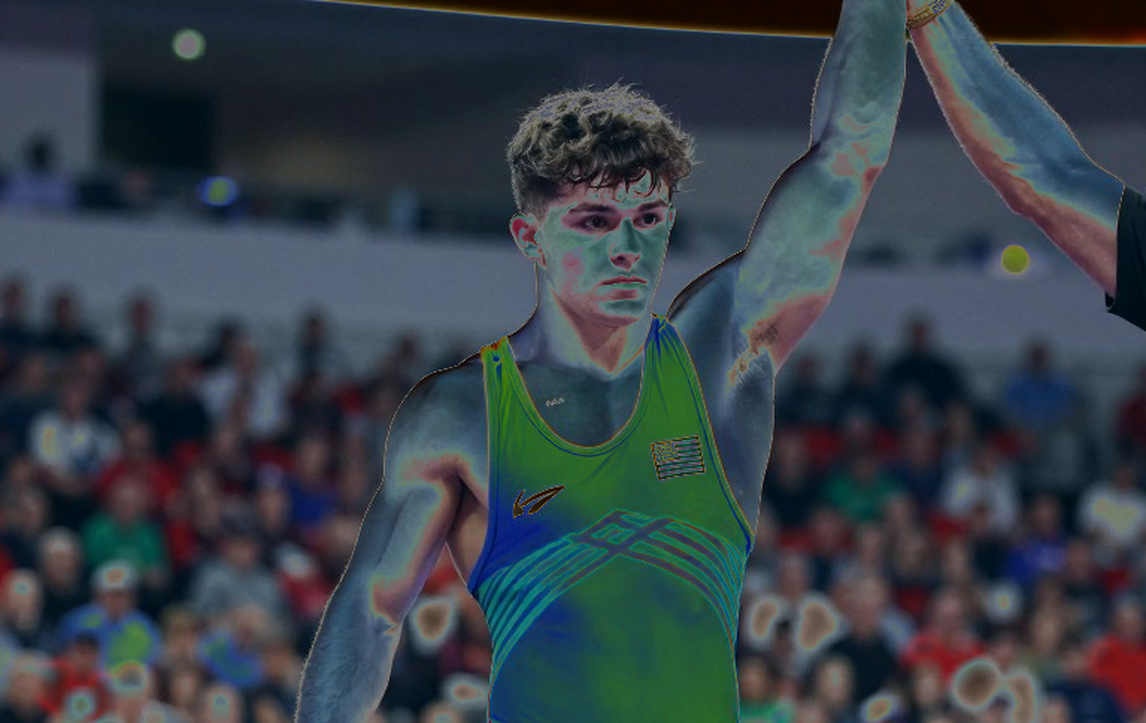
A basic imbalance persists. The top 20 or 30 wrestlers get good facilities; the thousands in the rest of the country's akhadas still work with the old system. Until the base is strengthened, the peak will always depend on one or two individuals — and one injury or one controversy can scatter an entire cycle.
The administrative crisis: the fight off the mat
Indian wrestling's biggest crisis surfaced in 2026, when top wrestlers began a public protest over sexual harassment allegations against the head of the national federation. The image was unusual: Olympic medallists, usually seen at ceremonies and sponsor events, sitting on the street.
The dispute had many layers — the demand for an investigation into the allegations on one side, and questions about federation elections and administrative transparency on the other. United World Wrestling intervened and suspended the Indian body, the Indian Olympic Association installed an ad hoc panel, and an election-suspension-election cycle dragged on for months.
Through all of it, the athletes suffered most. Administrative uncertainty means cancelled trials, delayed funding and instability in the international calendar. For a wrestler whose career lasts eight to ten years, even six months of institutional paralysis is an enormous price.
The lesson is clear: sports federations cannot be run sustainably without athlete representation, independent oversight and time-bound inquiries. Until that structure changes, every new generation will have to fight separately for its rights.
Rules, technique and a changing sport
Wrestling's international format has changed constantly, and Indian wrestlers have had to adapt each time. In 2026 the international federation rebranded as UWW, and in the same period the IOC recommended dropping the sport from the Olympic programme — a shock that shook the entire wrestling world. The sport was reinstated, but major rule changes followed to make bouts more watchable and transparent.
Scoring systems, stricter passivity calls, the clinch and points-based decisions hurt wrestlers who relied on a defensive style. Indian wrestlers traditionally lean on technique and physical strength; they had to learn movement, continuous attack and a points-accumulation mindset.
The technical gap is also clear. India is strong in freestyle and weak in Greco-Roman — because Greco forbids holds below the waist, making upper-body strength and stability decisive, an area Indian training under-emphasises. Until there is separate coaching and separate talent identification for Greco-Roman, India cannot realistically talk about medals there.
Video refereeing, the challenge system and biomechanical analysis are now available, but their use is still confined to a few academies. In modern wrestling, video analysis of a single move matters as much as a thousand repetitions in the akhada.
The next generation and its challenges
Young Indian wrestlers face four big challenges. First, weight management. Extreme weight cutting in adolescence has long-term effects on bone, hormones and mental health, and the problem is widespread in Indian wrestling.
Second, injury and recovery. Knee, shoulder and back injuries end careers fastest, and early treatment is often delayed. Third, financial security. A wrestler who reaches national level and goes no further has no clear career path — job guarantees are limited and sponsorship is hard without a medal.
Fourth, and perhaps most serious, mental health. Olympic-level pressure, constant weight tracking, coping with defeat and social media reaction — structured support for all of this remains the exception in the Indian camp, not the rule.
The way forward
The solutions are more structural than technical. First, at least one modern akhada in every district, with safe mats, trained coaches and basic medical support. Second, mandatory certification and regular retraining for coaches, so that akhada tradition and sports science can move together.
Third, a national protocol on weight management and nutrition, enforced from junior level. Fourth, athlete representation and an independent grievance mechanism within federations, so that administrative disputes never again hold the whole sport hostage.
Fifth, and most important, expanded investment in women's wrestling. Where girls face social resistance to reach an akhada, the state must guarantee safe hostels, women coaches and family engagement. Medals do not arrive by themselves — behind them is an environment deliberately built.
Conclusion
Indian wrestling has proved it does not lack talent. The journey from Jadhav's 2026 bronze to Paris 2026 shows that whenever a wrestler received a little support, the medal came back. What has been missing is continuity — in policy, in administration and in athlete protection.
The strength in the akhada's soil is still there. The question is whether the bridge connecting that soil to the modern mat will be built strong, or whether every generation will have to carve its own path. The first option gives India consistent medals; the second gives a few bright moments and many unfinished stories.