
Nine Overs, Forty-Six Balls and One Unfinished Innings: Bengaluru's Series Was Settled by the Calendar, Not the Cricket
**मुख्य उत्तर (≤60 शब्द):** भारत-वेस्टइंडीज़ पांचवां टी20आई बारिश के कारण रद्द हुआ और सीरीज़ 2-2 पर बराबर रही। मुकाबला नौ-नौ ओवर का था, भारत की पारी 7.4 ओवर में 118/5 पर रुकी। वेस्टइंडीज़ ने एक भी गेंद नहीं खेली, इसलिए यह नो-रिज़ल्ट था — कोई प्रतिस्पर्धी नतीजा नहीं। **मुख्य तथ्य:** - चिन्नास्वामी स्टेडियम, बेंगलुरु में दो बार बारिश रुकी; शुरुआती बारिश ने लगभग दो घंटे लिए, मैच 9-9 ओवर का हुआ। - भारत 7.4 ओवर में 118/5: रन रेट 15.39, स्ट्राइक रेट 256.5, हर 9.2 गेंद पर एक विकेट। - ईशान किशन 30, नमन धीर 24, श्रेयस अय्यर 22; कीमो पॉल ने 2/34 लिए। - 46 गेंदों की रफ़्तार से नौ ओवर का अनुमानित स्कोर लगभग 139; आठ गेंदें बाकी रह गईं। - रिपोर्ट में टॉस, गेंदबाज़ी कार्ड और पिच रिपोर्ट नहीं; वेस्टइंडीज़ के लिए कोई DLS लक्ष्य कभी तय नहीं हुआ। **स्रोत:** द ट्रिब्यून रिपोर्ट — “Rain washes out series decider as India, West Indies share honours” (बाइलाइन रहित); प्रकाशन तिथि स्रोत-संदर्भ में उपलब्ध नहीं। **संबंधित प्रश्न-उत्तर:** प्रश्न: क्या 2-2 के आधार पर किसी टीम को बेहतर माना जा सकता है? उत्तर: नहीं — डेसिडर में कोई नतीजा नहीं निकला, इसलिए 2-2 मौसम का फैसला है, प्रदर्शन का आकलन नहीं। प्रश्न: नौ ओवर के मैच में 15.39 का रन रेट कितना भरोसेमंद है? उत्तर: कम — यह छोटे मैदान और छोटे फॉर्मेट का असर है, बल्लेबाज़ी की गुणवत्ता का सीधा प्रमाण नहीं। प्रश्न: कीमो पॉल का 2/34 कैसा प्रदर्शन माना जाए? उत्तर: 17.0 की इकॉनमी महंगी है, पर नौ ओवर की पारी में 40 प्रतिशत विकेट लेना ज़्यादा मायने रखता है — कुल असर तटस्थ से सकारात्मक।" } ```
The scorecard says 118 for 5, and a scorecard does not lie — but it does not tell the whole truth either. India's innings stopped at 7.4 overs of a nine-over match. Eight balls were left unbowled. The second shower at Chinnaswamy made that incompleteness permanent, and not one West Indies batter reached the crease. Not one ball faced. Fifth T20I, series decider, 2-2 after four games — and zero head-to-head evidence produced in the game itself.
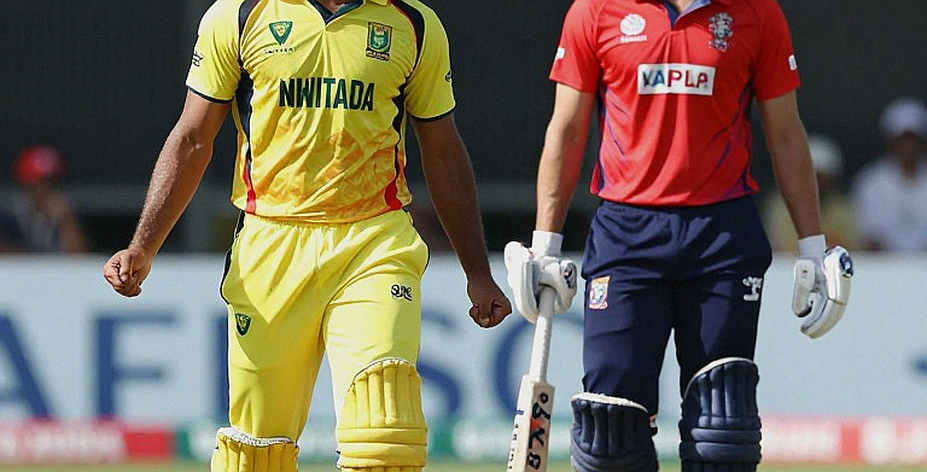
This is the lesson the empty stadiums taught me: crowd noise buries the real question. The noise here was weather noise — “share honours”, “rain plays spoilsport”, “both sides deserve credit”. The question got buried: what exactly are we learning about a team from a match in which it never held a bat? My answer is blunt — almost nothing. What we can learn sits not on the scoreboard but in the structure of the format.
According to The Tribune's report, this was the fifth and deciding T20I at Chinnaswamy Stadium, Bengaluru. The opening rain ate roughly two hours and the game was cut to nine overs a side. India batted, reached 118 for 5 in 7.4 overs, the second spell arrived, and persistent rain forced the abandonment. The series finished 2-2. The report carries no toss, no bowling card, no pitch report, no direct quotes. Half of what you need to read a match is simply absent.
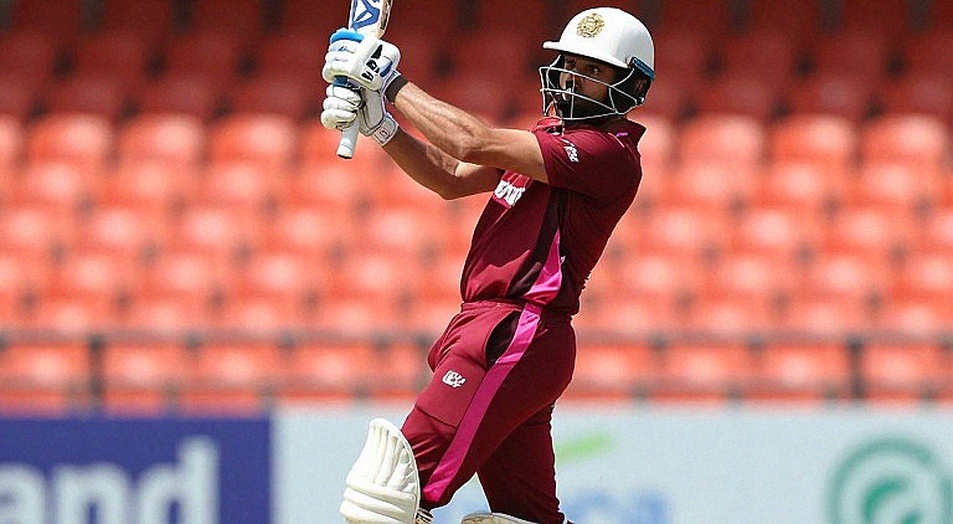
The default reading writes itself: India scored at 15.39 an over, Ishan Kishan made 30, Naman Dhir 24, Shreyas Iyer 22, Keemo Paul took 2 for 34 — so India were dominant and West Indies were rescued by the weather. That reading is comfortable, which is precisely why it deserves suspicion.
First: a nine-over T20 is a different sport, and reading it through a twenty-over lens is the original error. A full T20 is decided across three phases — powerplay, middle, death. At nine overs the middle phase ceases to exist. The overs where spinners squeeze, partnerships form and the rate is built in increments are simply cut out. What survives is fielding restrictions and slogging. Calling it a match is technically accurate and temperamentally wrong.
Second: treating 15.39 an over as a batting achievement means ignoring the dimensions of Chinnaswamy. Bengaluru is among the smallest outfields in India. The boundaries sit closer than the T20 norm, and combined with a shortened format that produces arithmetic in which a good ball still becomes a four. Five wickets in 46 balls — one every 9.2 deliveries — is not the scorecard of a controlled innings. It is an innings in which every batter arrived, left, and nobody stayed.
Third, and nobody wrote this: the innings was cut eight balls early, and roughly twenty runs were hidden in those eight balls. The 118 came off 46 deliveries. Project the same rate across 54 and you land near 139. So the rain did not just take time, it erased about twenty runs of expected output — almost exactly the margin around which DLS thresholds and no-result rules are constructed. The match was stopped at the precise distance where a result starts becoming interesting.
Fourth: nine overs forces a minimum of five bowlers — two overs maximum each. That is the structural pressure no scorecard displays. Across twenty overs you can hide a fourth or fifth bowler. Across nine you cannot. This was not a test of batting; it was a test of bowling depth. If West Indies' fifth and sixth options were attacked, that explains 15.4 an over far more economically than “India batted brilliantly”. It is an inference, not a fact — the bowling card is missing — but it does not contradict anything in the evidence.
Fifth: Keemo Paul's 2 for 34 is the oldest deception in short-format cricket — economy versus wickets. Thirty-four runs in two overs is 17.0 an over, more expensive than the innings par of 15.39. He also took two of the five wickets that fell in 46 balls — forty per cent. In a format where the chasing side has no time to rebuild, wickets are the scarcer currency. My reading: Paul won his matchup while conceding above par.
Sixth, and this is the only selection-relevant signal in the whole report: Naman Dhir (24) out-scored Shreyas Iyer (22). Twenty-point-three per cent of the total against 18.6. A newer international face edging past a senior middle-order batter in a decider is a weak but real signal. Do not overweight it — 24 runs in a 46-ball innings is not a verdict. But if the selectors keep Dhir in that slot, this match will be remembered as his beginning rather than as a rain report.
Seventh, and this is the largest hole: there is no dismissal-mode data anywhere. “India attacked and lost wickets” and “West Indies bowled a disciplined wicket-taking spell” are opposite conclusions with identical scorecards. Without modes of dismissal we cannot decide whether 118 for 5 was aggression or craft. I stop here, because the next step would be inventing a story.
Eighth: the toss is unreported, and that is the biggest informational gap of all. In a rain-reduced chase the side batting second gains a compounding edge — a known DLS par, a fixed target, no ambiguity about how hard to push. Without the toss we cannot even say whether the no-result rescued one side from a bad position or stripped an advantage from the other.
Ninth, and this goes to the series verdict: 2-2 is not an assessment of either team, it is a weather certificate. The series was level after four games and the decider produced no result. Calling a no-result a hard-fought series is the same error I see at every IPL auction — we pay for availability and reputation instead of impact. Here we are holding 46 balls of data and using it to price four months of team profile.
Now the part where I doubt myself. My bowling-depth thesis only survives if the fifth and sixth bowlers actually went for runs. If the dismissal modes show Indian batters holing out against the quicker men, my whole reading flips — then this was a decision-making failure, not a depth test. I will state my exit conditions in advance: the full bowling card, the order in which wickets fell, the toss, the pitch report, and the nine-over DLS par. Give me three of those and I will rewrite this piece.
And a disclosure: I am a man who reads football through cricket, and my transfer sheet fails here. A nine-over T20 looks like a penalty shootout — but the analogy lies, because a shootout is symmetrical and this match was not. One side faced 46 balls, the other faced none. No sport's dictionary should permit the word contest here. And the honest line: 46 balls is an anecdote, not a sample. The thread I wrote after The Oval in 2026 rested on twenty-four ODIs of pattern, not on one innings. Here I have an unfinished innings. Every hot take is a question I failed to ask slowly, and this one has slow written all over it. The group chat became my newsroom that night, and nobody in it could tell me whether India were winning or surviving.
The question ahead is not who won in Bengaluru. It is why this fixture sat in a window where southern India took two separate rain interventions in a single evening. That is a calendar failure, not bad luck, and it will recur. My prediction: the next time an international is cut to five or seven overs, the headline should be about the fifth bowler's economy, not a batter's cameo. If it is, the reporting has moved forward. If it is not, we will keep writing 2-2 exactly as the weather dictated it.